
Retaining Walls
Retaining Walls Engineered for Your Property
Built to manage slopes and drainage while adding structure and dimension to your landscape.
Three approaches to fit your site
The material and construction method depend on your soil, slope, and how the wall works with the rest of your landscape.
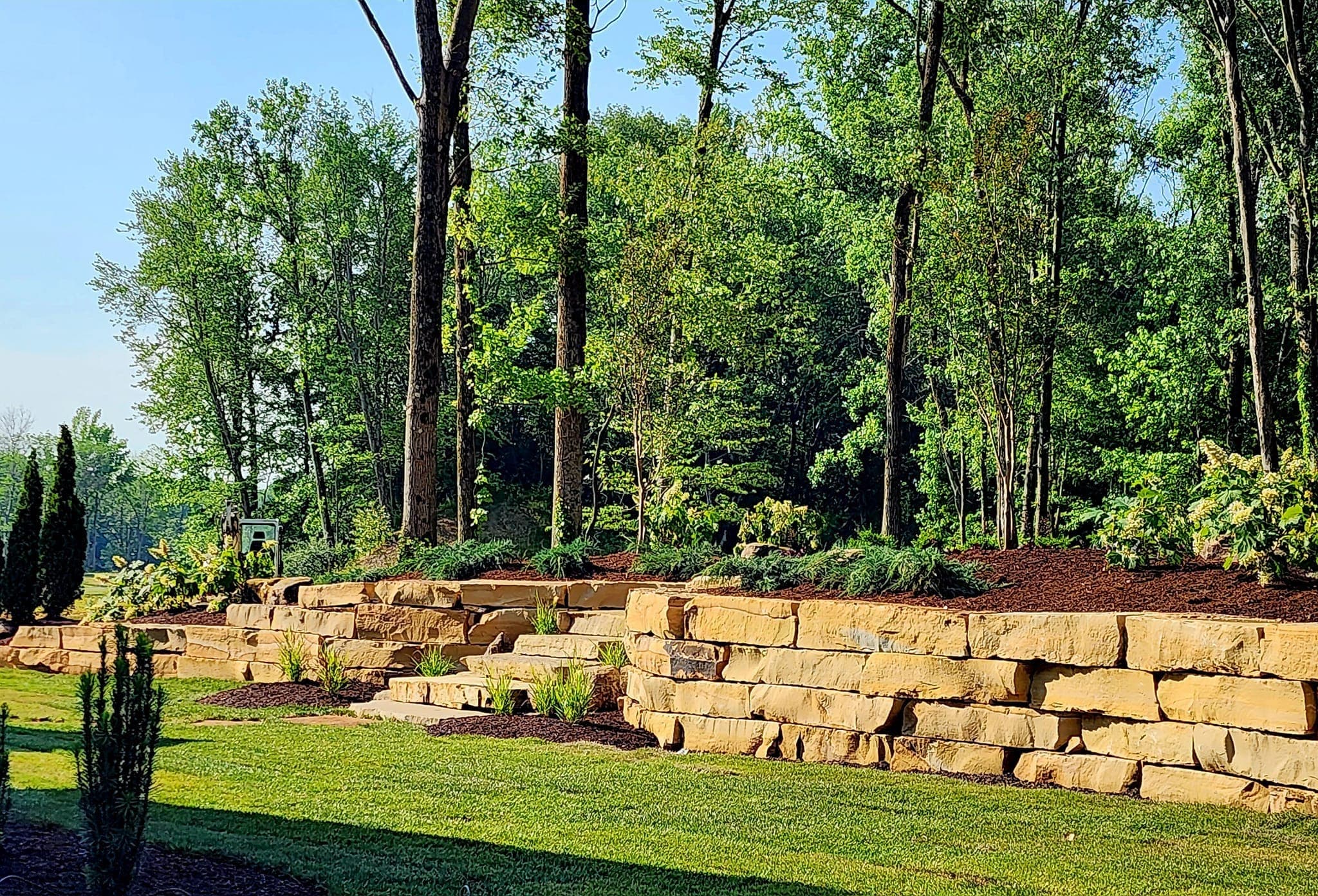
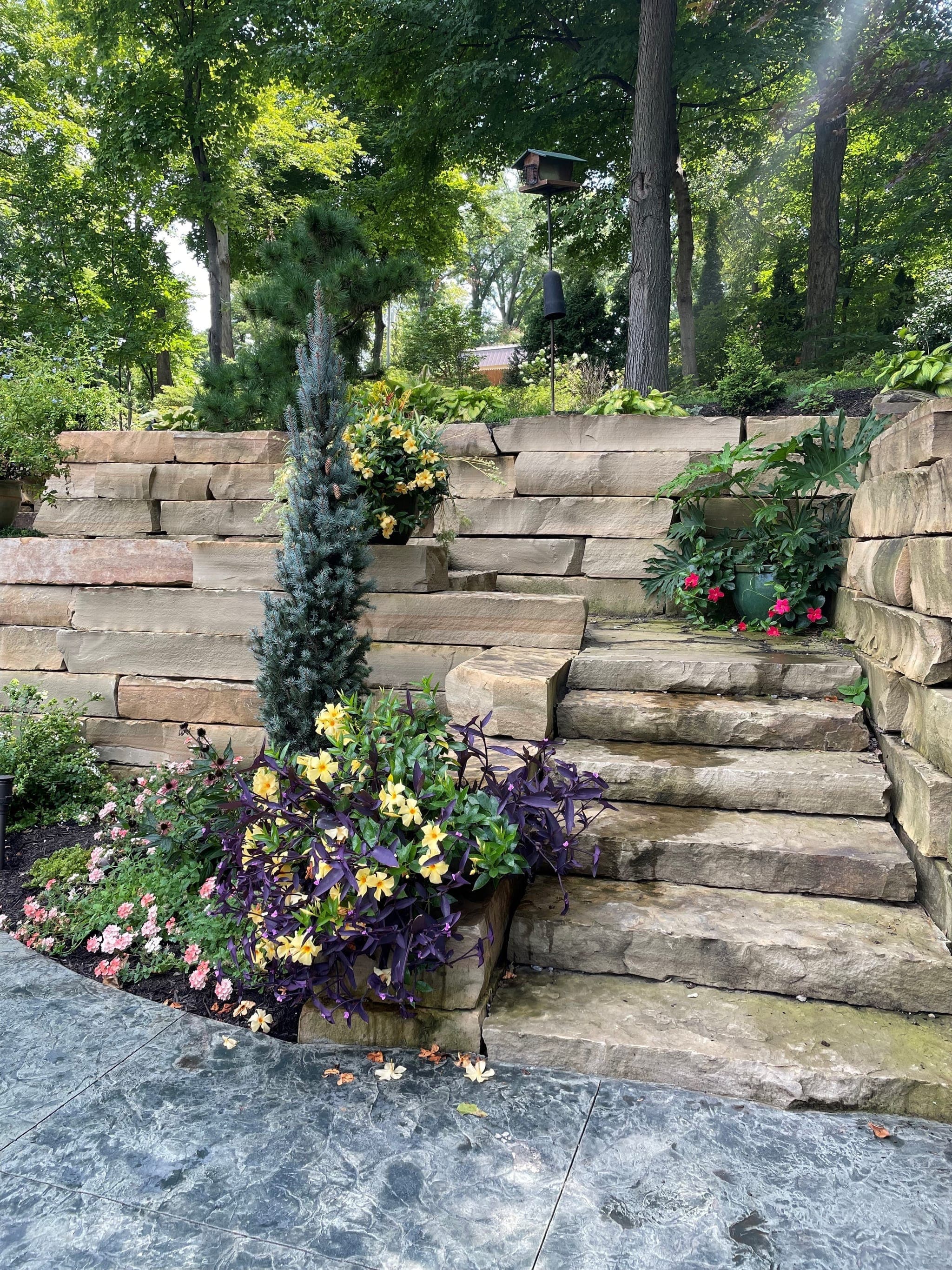
Natural Stone Walls
Best for low-to-mid height walls where you want a natural look that blends with the surrounding landscape.
- Fieldstone, limestone, or sandstone selected to match your property
- Ideal for garden borders, terraced beds, and slopes under 4 feet
- Pairs naturally with walkways, patios, and planting beds
- Gets better looking over time as the stone weathers
 Design Visualization
Segmental Block Walls
The go-to for taller walls and steeper grades where structural strength is the priority.
- Interlocking blocks that hold firm through freeze-thaw cycles
- Built with geogrid reinforcement for walls over 4 feet
- Available in a range of colors and textures to complement your home
- Clean, uniform lines for a more formal or modern look
 Design Visualization
Boulder & Seat Walls
Large boulders for holding natural slopes. Low seat walls for defining patios and outdoor rooms.
- Boulders placed to follow your land's natural contour
- Seat walls add built-in seating around patios and gathering areas
- Flagstone caps for a smooth, comfortable sitting surface
- The most natural option for wooded lots and informal landscapes
What a properly built wall does for you
A retaining wall is a structural investment that pays off in stability, usability, and curb appeal for decades.
Erosion & Drainage
Your soil stays put and water goes where it should. Every wall includes proper drainage behind the structure so your landscape, foundation, and walkways stay protected.
Usable Space
That steep hillside becomes level ground you can actually use. Terraced walls turn wasted slopes into gardens, patios, and play areas.
Decades of Stability
Proper base preparation, compaction, and drainage mean your wall stays straight and solid for decades. No leaning, no shifting, no rebuilding in five years.
Property Value
A well-built retaining wall is one of the most visible structural improvements you can make. Buyers notice the usable space and the craftsmanship.
Retaining wall questions answered
How tall can a retaining wall be?
Most residential retaining walls range from two to six feet. Walls over four feet typically require engineering and a permit. We handle both.
Do retaining walls need drainage?
Yes. Every wall we build includes a drainage aggregate and perforated pipe behind the structure. Proper drainage prevents hydrostatic pressure that causes failure.
What materials are used for retaining walls?
We build with natural stone, segmental block, and poured concrete depending on the structural needs and aesthetic goals of your project.
How long do retaining walls last?
A properly built retaining wall with correct drainage lasts 50 years or more. Material choice and base preparation are the biggest factors in longevity.
Can retaining walls fix drainage problems in my yard?
Retaining walls are one of the most effective ways to manage slope, redirect runoff, and prevent erosion on residential properties.
Where do you build retaining walls?
We design and construct retaining walls for properties in Newburgh, Evansville, Boonville, Chandler, and the greater Tri-State area including western Kentucky and southern Illinois.
“Randy was great at helping us pick several plants for our landscaping. He gave us different options and opinions to help us make a sound decision. He was knowledgeable and his expertise was appreciated! Thank you!”
Why one company matters
One conversation
You explain your vision once. Every crew member, from designers to installers, already knows the plan.
One schedule
No waiting on one contractor to finish before another can start. Every phase is coordinated so your project moves forward.
One guarantee
If something isn't right, you call one number. No finger-pointing between companies, just a team that stands behind the work.
Your perfect retaining walls start here.
Describe your space, what you want it to feel like, and any ideas you've been thinking about. From there, you'll get a clear plan and honest guidance, no pressure, no surprises.